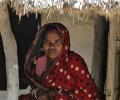
The Congress strategy is to reach out to the rural poor as BJP's prime ministerial candidate Narendra Modi has successfully displaced Prime Minister Manmohan Singh as the middle class hero. Anita Katyal reports

According to the govt, Greenpeace activist Priya Pillai cannot be allowed to travel to London as she would indulge in anti-national activities.
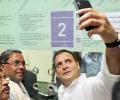
The IIM-B's 'Karnataka innovation report' has become the basis for the Congress party's election narrative, particularly to distinguish it from the 'Gujarat model of development', reports Archis Mohan.

'To suggest that activists -- and that too 'five star activists' -- are driving the courts, is to betray an ignorance of the functioning of the legal system of the most gross kind,' says Senior Advocate and former Additional Solicitor General Indira Jaising.

When KV Thomas took over as minister of state for food and consumer affairs (independent charge) on January 19, 2011, he was tasked with taking forward one single, important objective: expedite the implementation of the National Food Security Bill.
'Today we see the worrisome phenomenon where honest officers who run afoul of the government being chased, hunted down and dirt being dug up on them.'

Invoking Sardar Vallabhbhai Patel's work for national integration, Prime Minister Narendra Modi on Saturday said "unity, peace and harmony" was the first condition if India has to move forward and attain new heights of development.

20 years ago this day, May 11, 1998, India conducted its second nuclear test at Pokharan in Rajasthan. In a fascinating interview on Rediff.com, K Subrahmanyam revealed how Indian PMs reacted to nuclear ambitions.

'The top level will be development and then sab ka saath, sab ka vikas.' 'But at the street level, the tongue will be vicious.'
.jpg)
Privatising public sector companies would have encountered significant opposition from their managers as well as from strong unions.
A recent academic paper on probability theory shows how beliefs are influenced by interpretations of data rather than the data itself, says T C A Srinivasa-Raghavan.

One solution to India's challenges of education, employment, employability lies in state governments adopting apprenticeships on a large scale.
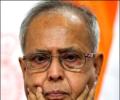
India wants peace with Pakistan but there can be no compromise with its own territorial integrity, President Pranab Mukherjee has said, while asserting that state-sponsored terrorism from across the border cannot be accepted.
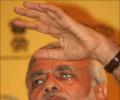
Escalating further the controversy over his interview to Doordarshan, Narendra Modi on Saturday rued the "decline" in journalistic freedom in the public broadcaster and invoked "horrific" memories of the Emergency days in 1975.

Perhaps half-way through India's demographic transition, what is the outlook for the future?

'When war is thrust on you as in 1962 and 1965 or is tempting as in 1971, ensure that all other fronts are kept quiet, leaving your army free to deal with one,' says Shekhar Gupta.

Mahesh Vijapurkar is hopeful that two Supreme Court directives and Gopinath Munde's confession that he spent Rs 8 crore to get elected to the Lok Sabha may lead to a possibility that the processes administered by the Election Commission may get cleaner, even if only over time.

A summary of sports events and persons who made news on Wednesday.'

The fiscal deficit of the Centre remains a worry, running at over 6.5 per cent of GDP in April-September 2014, mainly because of revenue shortfalls from exaggerated projections in the government's July Budget and despite the relief on subsidies from lower oil prices.

'There is perfect coordination between them,' Vice-President Hamid Ansari said when Rediff.com asked what differences he had noted between Raul Castro and his elder brother. 'Commandante (Fidel Castro) remains the undisputed leader of the revolution.'
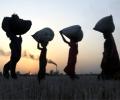
The Congress has ruled India for 54 of the last 67 years; that it took the party over six decades to come up with bills that provide citizens their basic needs is a shame, not a moment of triumph, says Amberish K Diwanji.

'Even if the anti-Modi 'Mahagatbandhan' gets a majority there is simply no way that Nitish Kumar can ensure even a stable government, leave alone a good -- clean, development-oriented -- government,' argues T V R Shenoy.
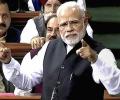
Replying to a debate on Motion of Thanks on the President's Address which was adopted by the House later amid walkout by Congress, he replied point-by-point to the issues raised by the Opposition, including surgical strikes and allocations for Mahatma Gandhi National Rural Employment Guarantee Act, agriculture sector and for Scheduled Castes. Opposition had moved 190 amendments to the Motion which were negated.
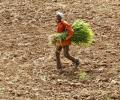
In spite of Budget's rural focus, the government has consistently stumbled in agriculture, says Shreekant Sambrani.
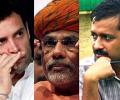
If Narendra Modi could tame his obsession with the Congress and the Nehru-Gandhi family, Arvind Kejriwal resist polishing his halo and Rahul Gandhi find his voice, we could begin a debate about the future of this country that actually addressed the seriousness of its problems, says Rahul Jacob.

Instead of a consumption stimulus the government must address the NPA issue with a war footing and invest in infrastructure, affordable housing and exports, says Sanjeev Nayyar.
'No private citizen can be prevented from holding or propagating in India or abroad, a view contrary to that of the government of the day. The government, it seems is misreading the mandate in the Lok Sabha as being a mandate to crush dissent. In times when ruling parties have brute majorities in Parliament, the true test of safeguarding democracy is its ability to allow dissenting voices to be heard,' says Indira Jaising, the former additional solicitor general.

With what joyous expectations I welcomed you! You have tumbled me into a cauldron of gloomy forebodings, says B S Raghavan.
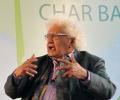
'For now, the AAP is the conversation,' Lord Meghnad Desai tells Rediff.com's Sanchari Bhattacharya. 'Everyone is talking about the 'Delhi model'. They have made so much difference. They have changed politics.'

'The Congress's allies won't be left behind in looking out for their own interests. Some will demand a bigger share of the ministerial or electoral pie, others will simply jump ship,' says T V R Shenoy.

'How can middlemen disappear as long as our political parties are sucking in massive amounts of black money?' 'There is an old political art well practised in New Delhi -- people create artificial problems and then solve it for you to earn your gratitude for a lifetime.'
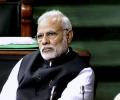
Demonetisation hit informal sector hard and caused job losses which was not addressed by the budget, Moily said.

'We saw how vigorous democracy was when it dislodged authoritarianism under Indira Gandhi. We saw its vigour again when it voted Mr Modi out of humble origins as prime minister. It was Nehru who laid that foundation for India and what is worrying today is Modi's rather imperial style of functioning,' says writer Nayantara Sahgal.

Congress Vice-president Rahul Gandhi, in an interview to a leading daily, has stated that he is "ready to take charge".
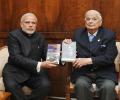
Tarun Vijay, MP, salutes the General whom he adored as a great friend.
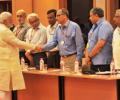
'I have seen in action six prime ministers and ten chief ministers, considered stalwarts in their days, and it is the first time, in all my experience, that a prime minister has gone into such great detail, laying down even the standards of cleanliness that should be maintained in all offices,' says B S Raghavan, former chief secretary, West Bengal.

One hopes the higher courts take the extraordinary steps needed to secure justice for the victims. The Gujarat carnage demands nothing less because of its unique nature and sponsorship by the State, argues Praful Bidwai.
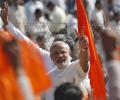
'A change of government will bring about a lot of changes because everything is frozen for the last two years. So, the frozen energies of India will be released.' Swadeshi Jagran Manch convenor Swaminathan Gurumurthy discusses the Modi phenomenon with Shobha Warrier/Rediff.com

The tragedy is that, at least on social media, the narrative that was being lapped up by many Indian Muslims was that Yakub Memon was being victimised. The purveyors of this poisonous line of thinking of course want this sentiment to grow since communal polarisation is the primary pillar of their political strategy, says Sushant Sareen.

Biometric authentication is based on the unscientific and questionable assumption that there are parts of human body that does not age, wither and decay with the passage of time.
